
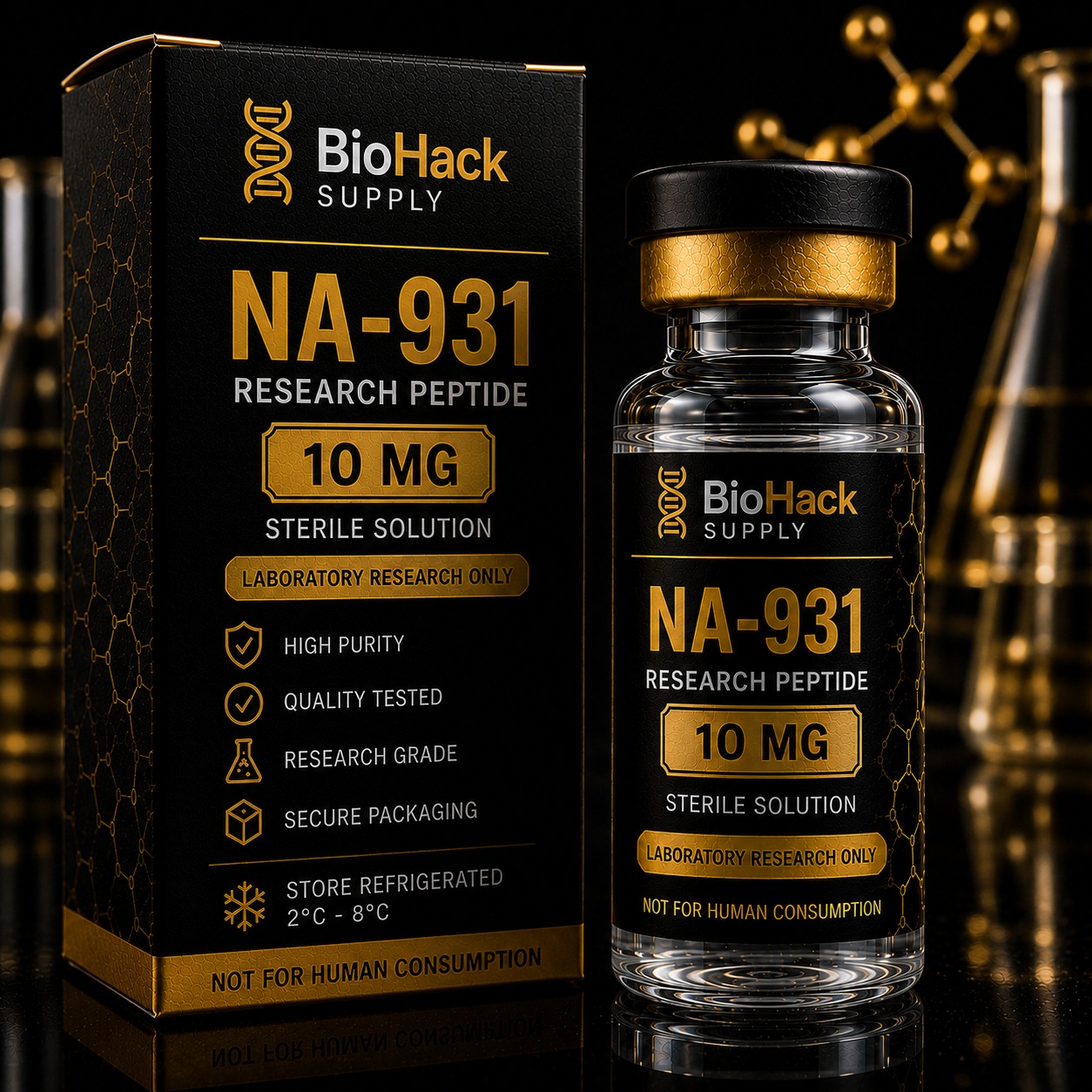
NA-931 Peptide (Bioglutide) – Advanced Research Compound
NA-931 peptide, also referred to as Bioglutide, is an investigational compound attracting significant interest in metabolic and pharmaceutical research. NA-931 has been studied for its activity across four biological pathways associated with metabolic regulation: IGF-1, GLP-1, GIP and glucagon receptors. Unlike conventional injectable GLP-1 therapies, NA-931 has been developed as an oral, once-daily compound, making its pharmacological profile an important area of ongoing research.
What Is NA-931?
NA-931 is an investigational quadruple receptor agonist being developed for research into obesity, body-weight regulation and related metabolic disorders. Its mechanism is designed to simultaneously interact with the IGF-1, GLP-1, GIP and glucagon signalling pathways, rather than concentrating on a single receptor pathway.
This multi-target approach is one of the defining characteristics of NA-931 research. Clinical investigators have evaluated the compound through randomized, controlled studies examining parameters including safety, tolerability, pharmacokinetics, pharmacodynamics and changes in body weight.
NA-931 Peptide Research
Interest in NA-931 peptide research has increased as researchers investigate whether simultaneous modulation of multiple metabolic pathways can produce meaningful effects on energy balance and body weight.
A completed Phase 1 study enrolled 74 participants and evaluated single and multiple ascending doses of NA-931 in overweight or obese participants and individuals with type 2 diabetes. The study examined safety, tolerability, pharmacokinetic and pharmacodynamic characteristics.
A subsequent Phase 2 study enrolled 126 participants and evaluated orally administered NA-931 over 13 weeks in adults with obesity or overweight status accompanied by at least one weight-related comorbidity. The registered study evaluated body-weight change, weight-loss thresholds, pharmacokinetics, pharmacodynamics, safety and treatment-emergent adverse events.
Published conference data from the Phase 1 programme reported dose-dependent reductions in body weight during the study period. The investigators also reported that no muscle loss was observed in that study population; these findings should be interpreted as clinical research results rather than proof of an established therapeutic benefit.
How Does NA-931 Work?
The defining feature of NA-931 is its quadruple receptor activity.
Research describes activity involving:
- GLP-1 receptors – involved in appetite, glucose regulation and metabolic signalling.
- GIP receptors – involved in glucose-dependent insulin secretion and energy metabolism.
- Glucagon receptors – associated with energy expenditure and metabolic regulation.
- IGF-1 signalling – involved in growth, development and metabolic processes.
By investigating these pathways together, researchers are examining whether coordinated receptor activity can influence multiple components of metabolic regulation.
This distinguishes NA-931 from traditional GLP-1 receptor agonists, which primarily target the GLP-1 receptor.
NA-931 and Oral Administration
One of the most notable characteristics of NA-931 research is its oral route of administration.
ClinicalTrials.gov records describe NA-931 as being administered orally once daily in the Phase 1 and Phase 2 research programmes. This differentiates the investigational compound from many established incretin-based medicines that are administered by injection.
The oral formulation is therefore an important area of pharmacokinetic research, particularly regarding absorption, exposure, tolerability and the relationship between dose and pharmacodynamic response.
NA-931 Clinical Development
NA-931 has progressed through early-stage human clinical research.
The Phase 1 programme investigated safety, tolerability, pharmacokinetics and pharmacodynamics. A subsequent Phase 2 programme evaluated NA-931 in adults with obesity or overweight status and weight-related comorbidities.
More recent 2026 scientific conference material describes a Phase 3 programme evaluating NA-931 alone and in combination with oral semaglutide for obesity. This demonstrates that NA-931 remains an investigational compound under clinical development rather than an established approved medicine.
NA-931 vs Traditional GLP-1 Research
The scientific interest surrounding NA-931 peptide research is partly related to its multi-receptor approach.
Traditional GLP-1 receptor agonists primarily activate GLP-1 receptors. NA-931 is being investigated as a quadruple agonist involving GLP-1, GIP, glucagon and IGF-1 pathways.
This does not automatically establish that NA-931 is superior to existing therapies. Instead, the difference represents a distinct pharmacological strategy that is being evaluated through clinical research.
Why Researchers Are Interested in NA-931
NA-931 has several characteristics that make it an interesting subject for ongoing research:
Multi-pathway activity: NA-931 is being investigated across four receptor systems associated with metabolic regulation.
Oral administration: Clinical research has evaluated an orally administered formulation rather than relying on injection.
Clinical development: NA-931 has progressed through Phase 1 and Phase 2 human studies, with Phase 3 research programmes now described in current scientific materials.
Metabolic research: Investigations have focused on body weight, obesity, metabolic parameters, pharmacokinetics, pharmacodynamics and tolerability.
Continued scientific interest: NA-931 has been presented at major scientific meetings, including the American Diabetes Association’s 2025 scientific programme.
NA-931 Research Use
NA-931 should be understood in the context of scientific and clinical research. Research involving NA-931 may examine receptor pharmacology, metabolic signalling, pharmacokinetics, pharmacodynamics, safety and potential therapeutic applications.
It should not be presented as an approved treatment or as a substitute for an authorised medicine.
NA-931 Peptide – Frequently Asked Questions
What is NA-931 peptide?
NA-931 is an investigational compound being studied for metabolic applications. Research describes it as a quadruple receptor agonist involving IGF-1, GLP-1, GIP and glucagon pathways. Clinical research has evaluated an oral formulation.
Is NA-931 the same as Bioglutide?
Bioglutide is a name associated with NA-931 in online and company materials. For scientific accuracy, product information should identify the compound primarily as NA-931 and reference Bioglutide as an associated name where appropriate.
Is NA-931 a GLP-1?
NA-931 is not simply a conventional GLP-1 receptor agonist. It is being investigated as a quadruple receptor agonist involving GLP-1, GIP, glucagon and IGF-1 pathways.
Is NA-931 approved?
NA-931 is an investigational compound undergoing clinical development. Current clinical-trial and scientific sources describe ongoing Phase 3 research, so it should not be represented as an FDA-approved treatment.
Is NA-931 administered orally?
Yes. ClinicalTrials.gov records for NA-931 describe oral administration in the Phase 1 and Phase 2 programmes.
What is NA-931 being researched for?
Research has mainly focused on obesity, weight control, and metabolic disorders. Clinical studies have assessed safety, tolerability, pharmacokinetics, pharmacodynamics, and body weight changes.
Research Disclaimer
NA-931 is an investigational compound. The information presented on this page is provided for scientific and educational purposes only and is not medical advice. NA-931 should not be represented as an approved medication, nor should research findings be interpreted as a guarantee of safety or efficacy. Researchers should consult applicable regulations, institutional requirements and authoritative scientific sources before conducting research involving investigational compounds.
Key Takeaway
NA-931 peptide is an emerging research subject with a distinctive multi-receptor pharmacological profile. Its investigation across IGF-1, GLP-1, GIP and glucagon pathways, combined with its oral formulation and progression through human clinical development, makes NA-931 an important compound to monitor within metabolic research.
As clinical development progresses, additional data will help establish the compound’s long-term safety, efficacy, pharmacology and potential clinical role.
Reviews
There are no reviews yet.