
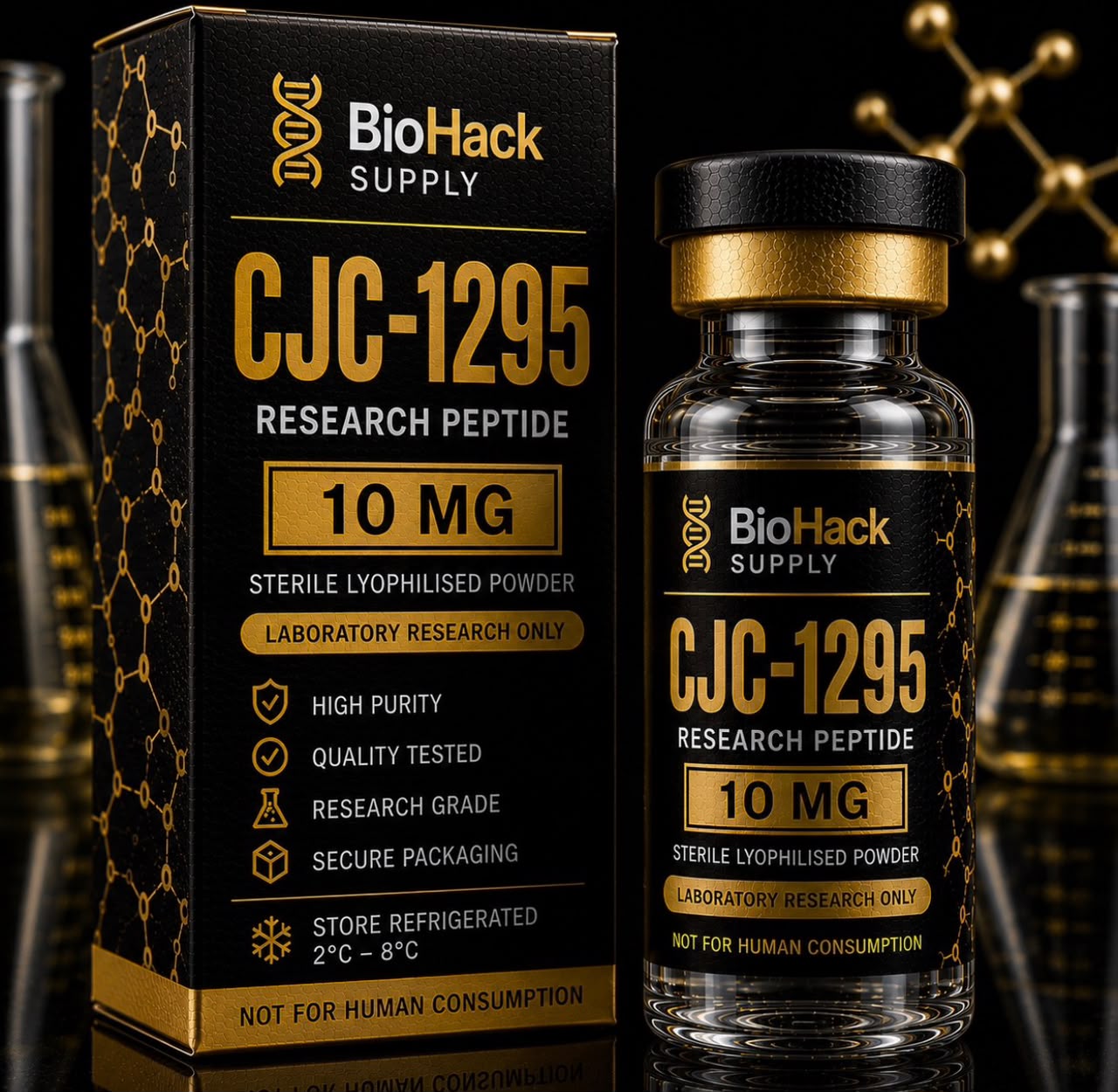
cjc 1295 peptide 10mg
$230.00
10 vials
cjc 1295 peptide : What the Research Actually Shows
CJC-1295 is a synthetic analog of growth hormone-releasing hormone (GHRH), widely discussed online for its potential effects on muscle, fat loss, sleep, and recovery. Much of what’s written about it online goes further than the actual clinical evidence supports. Here’s a grounded look at the mechanism, what’s been studied, and its current regulatory status.
What Is cjc 1295 peptide?
CJC-1295 is a 29-amino-acid peptide designed to mimic GHRH, the hormone your hypothalamus naturally uses to signal the pituitary gland to release growth hormone. Structural modifications remove the site normally cleaved by the enzyme DPP-4, making the peptide more resistant to rapid breakdown than natural GHRH.
Two versions exist:
- CJC-1295 with DAC — modified to bind albumin in the bloodstream, extending its activity to several days
- CJC-1295 without DAC (also called Mod GRF 1-29) — a shorter-acting version, with effects lasting around 30 minutes, studied for a more pulsatile release pattern closer to the body’s natural GH rhythm
How cjc 1295 peptide It Works
CJC-1295 binds to GHRH receptors on pituitary cells, triggering a signaling cascade (via adenylyl cyclase and cyclic AMP) that stimulates growth hormone release. Growth hormone then prompts the liver to produce IGF-1, the hormone that mediates many of GH’s downstream effects on muscle and tissue. This is a genuinely well-characterized mechanism at the receptor level — the open question is how much clinical benefit it actually translates into in humans.
CJC-1295 Benefits: Separating Research From Marketing
It’s worth being direct here: many websites list benefits like “increased lean muscle,” “reduced body fat,” “improved sleep,” and “anti-aging effects” as though they’re established outcomes. In reality, human research on CJC-1295 specifically is limited to a handful of small early-phase studies from 2006–2008, including a study on the somatotropic (GH) axis in healthy men and a small trial in HIV-related visceral obesity. These studies focused mainly on confirming that CJC-1295 could raise GH and IGF-1 levels — not on long-term outcomes like body composition, sleep quality, or anti-aging effects, which are typically extrapolated from GH/IGF-1 biology in general rather than demonstrated for CJC-1295 directly in controlled trials.
Notably, clinical interest in CJC-1295 appears to have slowed considerably after 2009, reportedly linked to safety signals, and there are no active clinical trials for the compound listed as of 2026.
cjc 1295 peptide 5 Side Effects
Reported side effects, drawn mainly from smaller studies and informal research use, include:
- Injection site reactions (redness, swelling, irritation)
- Water retention
- Tingling or numbness in extremities
- Headache
- Flushing or dizziness
Because there’s limited modern human trial data, this list should be treated as incomplete rather than a comprehensive safety profile. Some sources also note reported hypersensitivity reactions and raise open questions about long-term endocrine effects that haven’t been resolved through larger, modern studies.
Regulatory Status
CJC-1295 has not been approved by the FDA for any human therapeutic use. It was previously nominated to the FDA’s Category 2 list — a list for bulk drug substances the agency has significant safety concerns about for use in compounding — but was listed as withdrawn from that nomination as of April 2026. A withdrawn nomination is a change in administrative status, not an approval, and CJC-1295 remains unapproved for human use.
Products sold under this name are typically labeled for laboratory research only, reflecting this unapproved status.
Frequently Asked Questions cjc 1295 peptide
What’s the difference between CJC-1295 with and without DAC? The DAC version binds albumin in the blood, extending its effects to several days; the non-DAC version acts for about 30 minutes and is studied for a more pulsatile release pattern.
Is CJC-1295 FDA-approved? No. It has never received FDA approval for human therapeutic use.
Does CJC-1295 have strong human research behind it? No — human studies are limited to a small number of early-phase trials from 2006–2008, and clinical interest appears to have stalled since then.
Is CJC-1295 the same as HGH? No. It doesn’t replace growth hormone directly; it’s designed to stimulate the body’s own pituitary gland to release GH.
The Bottom Line
CJC-1295 has a scientifically plausible mechanism — mimicking GHRH to stimulate the body’s own growth hormone release — but the human evidence behind commonly repeated benefit claims is thin and dated. It remains an unapproved, research-only compound with no active clinical trials as of 2026, and any claims presented with more certainty than that should be read skeptically.
Be the first to review “cjc 1295 peptide 10mg”
Related products
Anti-Aging & Longevity
Anti-Aging & Longevity

Anti-Aging & Longevity

Anti-Aging & Longevity
Anti-Aging & Longevity
Anti-Aging & Longevity

Anti-Aging & Longevity
Anti-Aging & Longevity
Reviews
There are no reviews yet.