
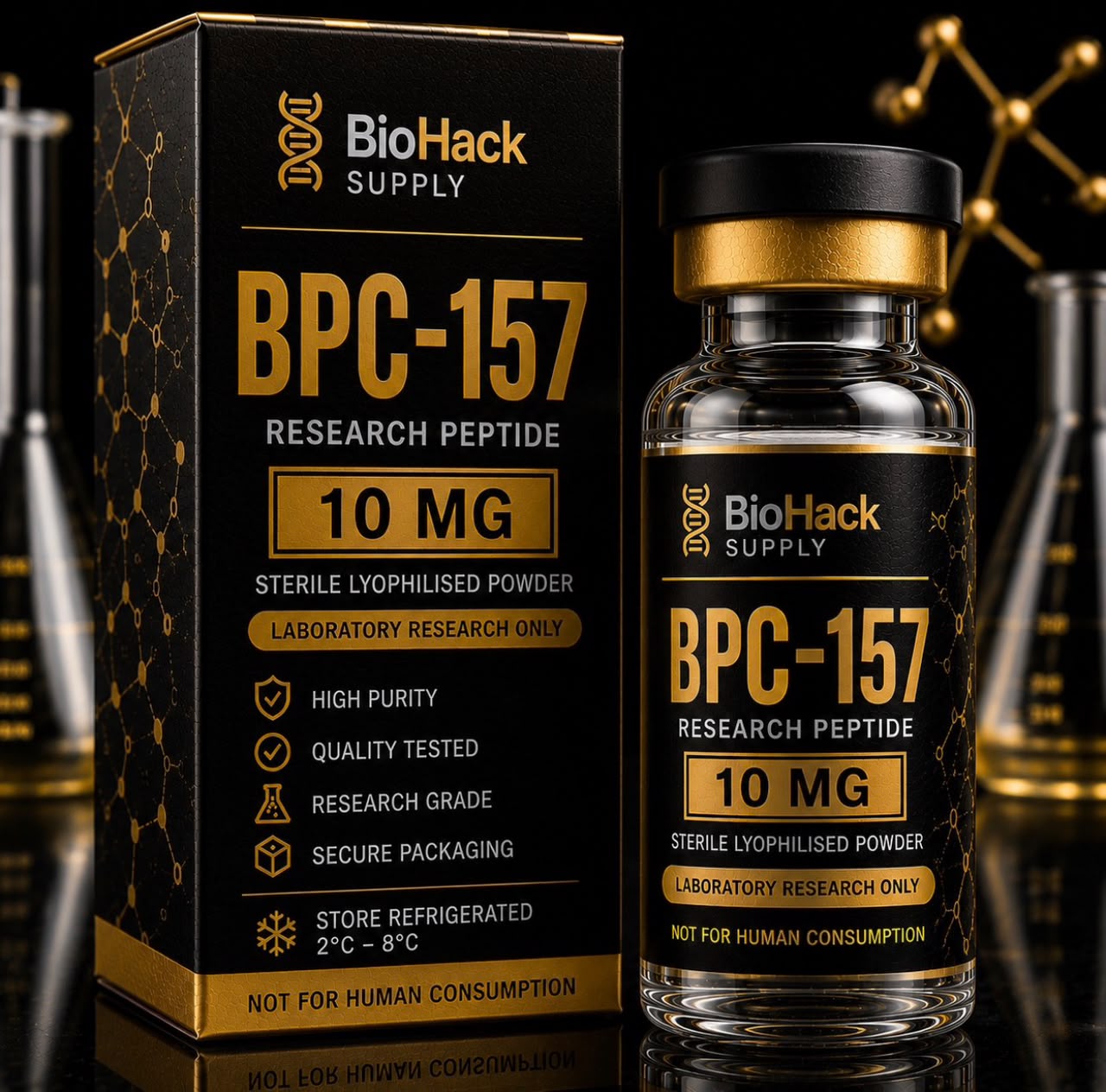
bpc 157 peptide
Price range: $110.00 through $240.00
10vials
BPC 157 Peptide
BPC-157 is one of the most talked-about research peptides today. People search for it because they want to know two simple things: what it might help with, and what risks come with it. This guide covers both, based on the current science.
What Is BPC-157?
BPC-157 stands for Body Protection Compound-157. It is a small chain of amino acids, called a peptide, based on a protein found naturally in human gastric juice (the fluid in your stomach). Scientists first studied it in the early 1990s. Since then, hundreds of animal studies have looked at how it affects healing in the body.
BPC-157 is not approved by the FDA as a medicine. It is sold as a research chemical, meaning it is meant for lab research, not for people to use on their own.
BPC 157 Benefits: What the Research Shows
Most of the evidence for BPC-157 comes from animal studies, not human trials. In these animal studies, researchers have reported that BPC-157 may:
- Help tendons and ligaments heal. Studies in rats show faster repair of damaged tendons.
- Support gut healing. Early research links it to protecting the stomach and intestinal lining.
- Help blood vessels grow. This process, called angiogenesis, may explain why it seems to speed up healing in injured tissue.
- Reduce inflammation. Some studies show it calms down swelling and irritation in damaged tissue.
It’s important to know these results come from animals, not people. Human clinical trials are still very limited. A small human safety study looking at BPC-157 given by IV was published in 2025, but this is just an early step, not proof that it works the same way in people as it does in lab animals.
bpc 157 peptide Side Effects
Because human studies are so limited, we don’t have a full list of side effects backed by strong evidence. Based on animal research and reports from people who have used it, side effects appear to be mild. These may include:
- Redness or irritation where it was injected
- Feeling tired
- Mild nausea
- Feeling lightheaded
Animal studies suggest BPC-157 has a fairly good safety record at the doses tested in those studies. But there is no long-term human safety data. That means we don’t know what happens with regular use over months or years in people. Some independent reviewers have also raised questions about long-term effects on blood vessel growth that deserve more research before drawing firm conclusions.
Is bpc 157 peptide Legal?
BPC-157’s legal and regulatory status has been shifting and is complicated. It has never been approved by the FDA as a prescription drug. Its status with pharmacies that prepare custom medications (called compounding pharmacies) has changed more than once in 2026, and the FDA has continued to review it. Products labeled “for research use only” are not meant for human use and are not checked by the FDA for safety.
If you are thinking about BPC-157 for any health reason, the safest step is to talk to a licensed doctor first. They can explain the real risks and tell you about treatments that are actually approved and tested for your situation.
The Bottom Line
BPC-157 shows promising results in animal studies for healing tendons, gut tissue, and reducing inflammation. But human research is still in early stages, and long-term safety in people is unknown. Anyone considering it should talk to a healthcare provider and understand it is not an FDA-approved medicine.
| choose an option | 5mg, 10mg |
|---|
Be the first to review “bpc 157 peptide”
Related products
Anti-Aging & Longevity

Anti-Aging & Longevity

Anti-Aging & Longevity
Anti-Aging & Longevity
Anti-Aging & Longevity
Anti-Aging & Longevity
Anti-Aging & Longevity

Anti-Aging & Longevity
Reviews
There are no reviews yet.